Showing posts with label Bird Lab. Show all posts

Sunday, April 3, 2016

Two Free Lessons Pass it On!!


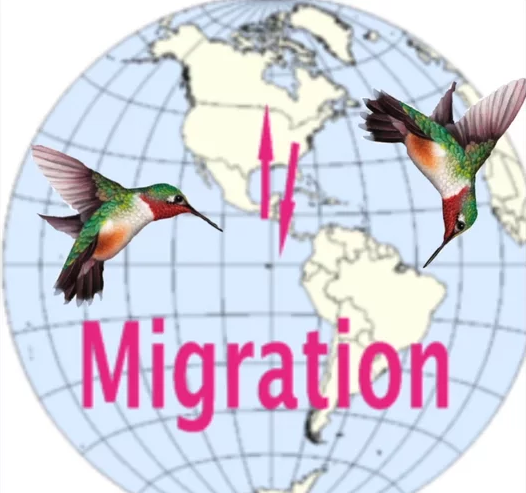
Lesson #6 Migration
Materials Needed:  
  1. Printed map to color
  2. Printed hummingbird coloring page
Click on the photo below to watch the lesson.  
Screen Shot 2016-03-28 at 3.35.33 PM.png

migration2.jpg
migration3.jpg

Click on
the photo below to take the quiz.
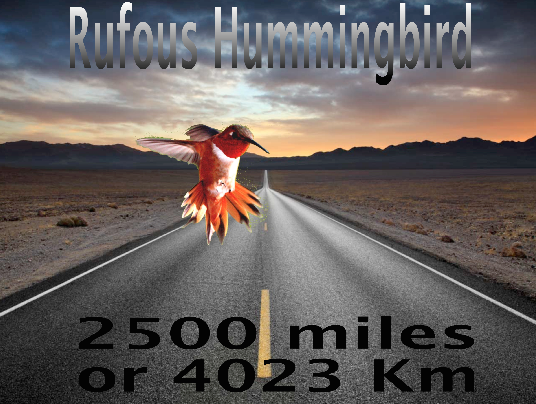
Rufous Migration2016-03-11 at 4.03.42 PM.png
To Do:
Screen Shot 2016-03-28 at 3.16.37 PM.png

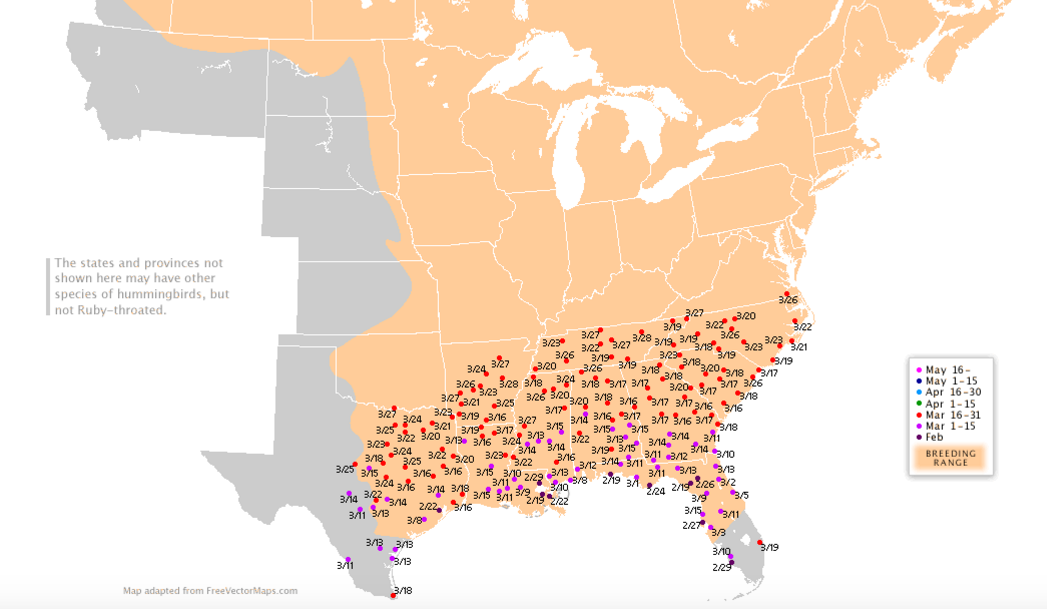
Click here to see the most current online hummingbird migration map. On this map you can see where the hummingbirds are right now!  Older students can join the group and take part in the hummingbird survey.  

Click here to print and color the migration map.

Click here to print the Ruby-throated hummingbird coloring page.

Lesson #7 Anatomy of the Hummingbird
Materials Needed:  
  • bubbles and wand
  • Water
  • Mirror
  • Scissors
  • Dark room
  • Flashlight or torch
  • Paper and colored pencils or crayons


Click on the picture below to watch the lesson.
Screen Shot 2016-03-12 at 2.32.41 PM.png


Click here to take the quiz on the google form.
Answers to the Hummingbird Anatomy Quiz: Click Here


To Do:

  1. Younger students can go outside and blow bubbles.  Try to imagine that each bubble is like a feather on the hummingbird.  Do you see all the colors that are reflected from the bubbles?
  2. Perform the rainbow experiment. Prepare a glass of water and place a small mirror inside.  Go into a darkened room.  Shine a flashlight on the glass towards the mirror.  Do you see the rainbow? Rainbows display the colors red, orange, yellow, green, blue, indigo, and violet in this respective order. Their formation can be caused by other factors as well such as mist, dew, and spray. When light strikes the surface of a water droplet, it changes speed thus causing it to bend. It is refracted as it enters the water and then refracts again as it leaves the droplet. The outcome is light being reflected in varying angles, creating a rainbow. Light travels in varying waves. When light refracts, the different colors bend in different amounts as well. This is the reason why we see different colors in a spectrum as we see a rainbow.
  3. Younger students can draw and color a rainbow in the correct order: red, orange, yellow, green, blue, indigo, and violet.

If you have benefited from these two classes and want me to keep you informed when the Hummingbird Class is released, please like my page on Facebook or subscribe to this website on the subscribe button to your right. Enjoy!

I LOVE comments and suggestions so please don't hesitate to comment here below.

Purchase all nine lessons for only $14.99


Enter your email here

Monday, March 7, 2016

It's All His Fault

Actually it's my fault. I've been working on a hummingbird online science class since May 2015. Our son Josh
bought me a GoPro and I've been filming hummingbirds ever since. I've spent at least 100 plus hours working on lesson plans, quizzes, tutorials, and film editing. It has been all consuming. 


It's almost to the point where I never want to see another hummingbird ever again. I AM SICK OF THEM!

And I am ashamed of myself for this. 


It's just that I've been filming them and studying them and dreaming about hummingbirds for so long... 
This past weekend I took a filming workshop with producer Darren Wilson of WP Films
Darren has produced five films: 
Finger of God, Furious Love, Father of Lights, Holy Ghost, and Holy Ghost Reborn

He has written two books:


Someone actually financed Darren's next film and purchased a plane for WP Films.  I wonder if Darren would fly me to Australia in his new plane to film the world's largest worms for the next online class? No? 
Oh well, a person can dream after all... 

The hummingbird project was almost finished but now it has to go back to the drawing board. That's why I said it's all his fault. I learned so much at the Filming God workshop that I couldn't possibly present it as it is now. 

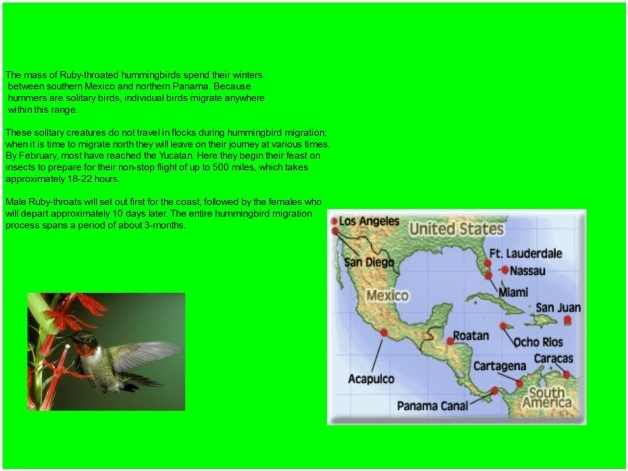
But the hummingbirds are on their way back here to visit us as I write. I promised my students that this lesson would be available to them when the tiny birds arrive back to South Carolina from Central America. (click here to see the migration map)

And so, I WILL get it done. And I WILL have it available by April 16th I tell you. Even if my eyes bulge out and turn blood red; it will be finished by April 16th.  It will be finished when the birds arrive.  

Because the next project will be worms. :)

Dreams and visions of them have been exploding in my head.  I can't wait to roll up my sleeves, stick my hands in the dirt, and explore the wild world of worms with my students.  

Friday, October 2, 2015

Help Them Get Out of Town!

I have been working hard to fatten up my little friends all summer long.  They came in spring, reared their young, and now its time to take off.  I'm talking about the Ruby-throated Hummingbirds.  The males arrived first and scouted out our home and farm.  Then the females arrived.  They built nests.They ate lots of insects.  And when it was time to make the long journey back to Central America they came to my feeders and engorged themselves on sweet water.  


I saw them grow and get fat and now they are leaving, but not for good.  They will be back sooner than you think so please help them out and make lots of these feeders for their spring arrival.  Hummingbirds like to fight (just like children) so make more than one and separate them by at least 15 feet.  

As most of you know, I have been working on an online Hummingbird Lab.  In one of these lessons, I teach the students how to make their own hummingbird feeder from materials you can find at home or at discount stores.  

Here are the materials you will need to make this feeder:
  1. sugar
  2. measuring cup
  3. hot water
  4. glue gun
  5. red and yellow plastic flowers
  6. an empty soda or water bottle
  7. a small empty plastic container with a snap on or screw on lid
  8. ribbon, twine, or pipe cleaner to make a hanger for the feeder


I still had plenty of birds at my feeder a few days ago but they will be heading south soon so this is a great project to make in the spring when they start heading back up north.  

Tuesday, September 17, 2013

The Outdoor Slugfest

Every day I watch an outdoor slugfest right outside my window. 

It takes place between little creatures that weigh less than 1/10 the weight of a mailing envelope or approximately 3 grams. 

But, they are oh so feisty. Especially the little male who has dominated the bird feeder in front of our window. It seems as though he is using most of the energy he takes in from the feeder in defending his self proclaimed "turf".  If any of the ladies nearby try try to zoom in on his territory he has a fit and chases them away. But oh how I love them all, even that nasty little male Ruby Throated Hummingbird. 

They are bulking up in order to fly over 500 hundred miles nonstop for 22 hours to make it to the Yucatan Peninsula or Panama.  Hummingbirds are solitary little creatures and prefer to make the journey alone instead of in large flocks.  Perhaps this is a good thing because prevailing storms and hurricanes could wipe out the entire population if they traveled together.   Hummingbirds have the smallest eggs of all birds but have the biggest hearts in relation to their size.  A typical heartbeat for a hummingbird is 1260 times per minute.  A person would have to eat 285 pounds of hamburger per day to equal the amount of food a hummingbird takes in.  They can fly backwards, forwards, and even upside down for brief moments.   

This is my mom with the hummingbird feeder we gave her for her 90th birthday.  
  
I think she looks pretty good for 90!! 

Wouldn't you know it the day we hung up her new feeder two hummingbirds already found it!

Right now we have five feeders hanging up around our house.  


 This is one we make in class.  

Thursday, September 6, 2012

Hummingbirds and Tongues!

Saturday August  25th was our first Hummingbird Lab.  Over the years students have given me the bodies of dead hummingbirds that died in their garages.  Apparently, when the car goes in and the garage door closes, the poor birds die from heat exhaustion. 

We learned how to make hummiingbird feeders using empty water bottles, yellow and red flowers, and tube stoppers. 
I was able to borrow the Proscope IPad Microscope 

We had so much fun looking at the feathers Hummingbird feathers are incredibly strong and light horny structures that form the plumage of hummingbirds. The hollow feather shafts support tightly hooked barbs and barbules. Pull feather barbules against their grain and the hooks separate to leave gaps in the feather; smooth them and the feather is once again streamlined for flight
Hummingbirds beat their wings 38 to 78 times a second while flying. Feathers are important for aerodynamics, but they have other important functions as well, such as insulating birds from harsh temperatures and waterproofing them from rain.
We couldn't resist looking at some other things...   
(Sam's eyelashes)
Here is the dried tongue of the hummingbird.  Did you know that the ancient Roman's considered this a delicacy? 

Some hummingbirds can migrate up to 2500 miles every spring and autumn. The ruby-throated hummingbird makes a 500-mile migration from North America to South America each year.

We looked at their nests and discovered that hummingbirds use spider webs to hold them together and to make them stretch to accommodate their growing young. 

Scamper the squirrel came by for a visit. 
As well as Hilda the hedgehog.  

Sunday, September 4, 2011

Boogie Woogie in the Woods

Recently, we visited the Cove Falls at the Historic Oconee Heritage Station with the Clemson University Master Naturalist Program. Beyond the park’s historic significance, there’s a fishing pond and 1.5-mile nature trail, the latter connecting to a half-mile trail that leads into Sumter National Forest and ends at Station Cove Falls, a 60-foot waterfall that’s considered one of the prettiest in the state. We hiked up to the falls to learn about the spray cliff wildlife community that is unique to that area. The instructors and park rangers exposed us to lots of interesting insects, fish, and plants.

Boogie Woogie Aphid

Boogie Woogie Aphid by Dr. James H. Blake

The Beech Blight Aphid a.k.a. the Boogie Woogie Aphid (Grylloprociphilus imbricator) prefers American beech.
Nymphs of the blight aphid exude white, waxy filaments, and the aphid forms large colonies that first appear
on twigs and branches, then on leaves. The blight aphids wiggle their abdomens in unison when disturbed,
giving rise to the unapproved common name "boogie-woogie aphid." I saw two different trees that had patches of bark covered with these varmints. It looked like the branch was churning in snow!

Strawberry Bush (Euonymus americanus)

The common names, which include American strawberry-bush, hearts-a-bustin', and bursting heart, refer to the odd red fruits that burst open in late fall.

Rattlesnake plantain Goodyera pubescens We found this terrestrial orchid somewhat near the beginning of the path.

Pileated_Woodpecker According to Dan, one of our naturalist helpers, these birds spot humans in their area before any human will ever spot them. Their loud call is an announcement that they know we are in their territory and they don't like it! You won't have to find them, they will find you. Click here to hear their amazing call.Nearly as large as a crow, the Pileated Woodpecker is the largest woodpecker in most of North America. Its loud ringing calls and huge, rectangular excavations in dead trees announce its presence in forests across the continent.

Liverworts: Marchantiophyta are a division of bryophyte plantsYou will find these one-celled plants clinging to the rocks near the falls.

Bloodroot: Sanguinaria canadensisThe roots of this plant are red when broken open. Indians used it to dye their baskets red and it was used as a folk remedy to cure cancer. The roots of this plant are highly toxic and if applied to the skin will cause severe protein degeneration. If ingested it will cause death.

We saw a lot more interesting plants like foam flowers, jack-in-the-pulpits and others. This is a fantastic hike and not too strenuous. I hope to go back in March to hear the sounds of the American toads,Bufo americanus, during their two week mating period.

Hope you can join me!